Home Blog Page 3

Wings of Change: The Coming Drone Proliferation in the Western Balkans

0

What are contributing factors to the rise of drones in the Balkans and how might they change the military balance of power in the region? Find out in the BCSP analysis written by the BCSP Senior Researcher Vuk Vuksanović, and Filip Ejdus, a professor in security studies at the Faculty of Political Science, University of Belgrade and the Member of the Executive Board at the BCSP.


The policy paper is available here: https://bezbednost.org/wp-content/uploads/2023/05/dronovi-ENG-07.pdf

Local ownership in international peacebuilding: key theoretical and practical issues

0

Review of Local ownership in international peacebuilding: key theoretical and practical issues, edited by Sung Yong Lee and Alpaslan Ozerdem, London, Routledge, 2015.


Published as Filip Ejdus (2016) Local ownership in international peacebuilding: key theoretical and practical issues, Global Affairs, 2:3, 369-370, DOI: 10.1080/23340460.2016.1196568

Available at: shorturl.at/kNUZ4

Military Security and Conventional Arms Control in the Western Balkan (with Tijana Rečević and Marko Kovačević)

0

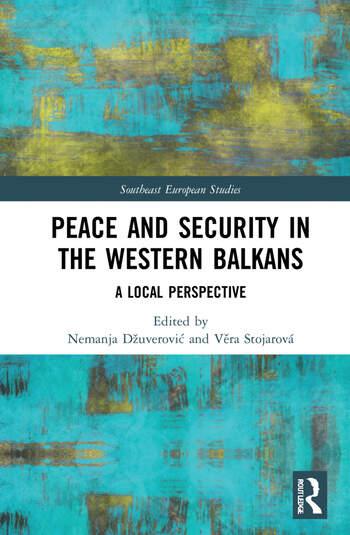
This chapter aims to study the evolution of regional security in the Western Balkans and its implications for military dynamics and conventional arms control since the end of the Yugoslav wars. The first section deals with the region’s transformation from a conflict zone to a security regime during the stabilisation phase (1995–2001). A critical aspect of this was creating the sub-regional conventional arms control (CAC) regime modelled after the Conventional Forces in Europe Treaty (CFE). The chapter then analyses the consolidation phase (2002–2013), when the region embarked on security community building, while the CAC regime was fully implemented and transferred to regional ownership. The third section zooms on the ongoing backsliding phase (2014–) when the region experienced a relapse of tensions and securitisations, which halted security community building. The last two sections unpack the military dynamics in the ongoing phase and conclude that the rhetoric of the arms race, the rising military budgets and the military modernisation. However, worrying trends have not yet undermined the regional balance of power and the CAC regime

Link: https://www.routledge.com/Peace-and-Security-in-the-Western-Balkans-A-Local-Perspective/Dzuverovic-Stojarova/p/book/9781032232270

Selling Peace: How to Frame a Serbia/Kosovo Deal in a Referendum

0

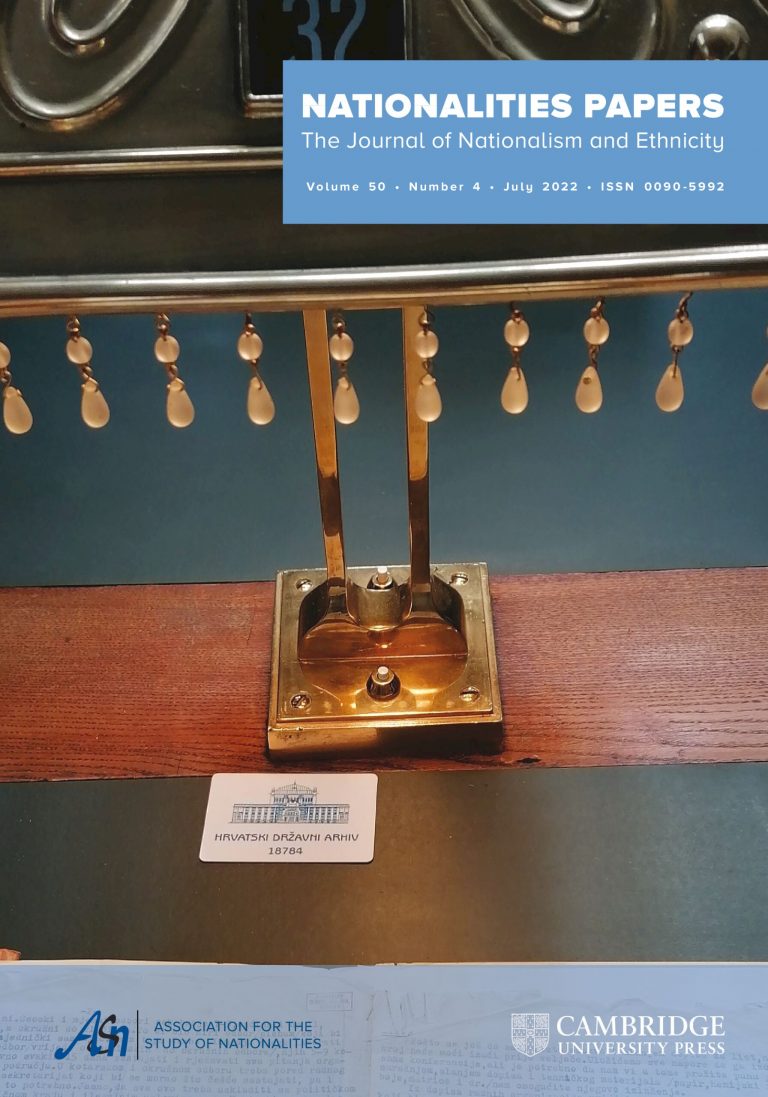
Are referendum campaigns involving issues about sovereignty more likely to succeed if framed in a positive rather than a negative way? We ran a survey on a hypothetical referendum on a peace agreement between Serbia and Kosovo to answer this question, and we experimentally simulated both positive and negative frames. We found that the positive campaign frame, i.e. one that contains an invitation to support a lasting peace in the Balkans, economic prosperity, Serbia’s path to EU integration, and the protection of the Serbian population and cultural heritage in Kosovo, is more appealing than the negative one, which focuses on avoiding the risk of failure. Our finding contradicts previous works that relied on the prospect theory to argue that negatively framed messages can attract more attention because people try to avoid adverse outcomes. To explain our findings, we argue that positive referendum campaigns are more effective than negative ones when the reference point is low due to attributive framing.

Link: https://www.cambridge.org/core/journals/nationalities-papers/article/selling-peace-how-to-frame-a-serbiakosovo-deal-in-a-referendum/37907F0EBFBC14BA86A961986A9F3006

ISA 2022 Nashville

0


ISA, Nasvhille
28 March-2 April 2022

On March 28-April 2, I took part in the ISA 2022 annual convention held in Nashville, Tennessee. My presentations were on “Banal sovereignty: footnotes and ontological security of Serbia and Kosovo” and “Indivisibility of sacred lands: the case of Kosovo” with Nikola Jović (University of Belgrade) (virtual sessions). The conference was especially memorable due to the unique charm of this city of music and the unforgettable chic of our grandiose hotel.

The Politics of Giving Voice: Media Framing of Extremist Groups in the 2010 Pride Parade in Serbia

Serbia was highly polarized ahead of the 2010 Pride parade in Belgrade, an event marred by violence. It is often assumed that the media played a negative role by uncritically giving voice to anti-LGBT activists. To investigate this claim, we conducted a quantitative and qualitative analysis of media reporting as well as 25 in-depth interviews with journalists. We conclude that the media denied extremists direct access to the media. However, due to the high polarization, the media did empower nonviolent opponents of the parade, and hence indirectly contributed to the stereotypical and sometimes derogatory representation of the LGBT population.


Journal url: https://www.tandfonline.com/doi/full/10.1080/10758216.2022.2050926?casa_token=0cQ0jorxYq4AAAAA%3AWw9iFWiqKgZbq60RDklVoeOmuHZPtxCNBp5djzO5jeCvYPpVxqetVUFChE9sDglbxabtE72Gw4h5

Anxiety, Dissonance and Imperial Amnesia of the European Union

Filip Ejdus, “Anxiety, Dissonance and Imperial Amnesia of the European Union”, Uluslararası İlişkiler, Advanced Online Publication, 10 March 2022, s. 1-16, DOI: 10.33458/uidergisi.1085564


Full article is available here: https://uidergisi.com.tr/uploads/yazilar/5971-ejdus-merged-pdf.pdf

Abstract


According to the master commemorative narrative of the EU, the European integration project represents a break with the violent European past characterised by fragmentation and nationalism, which culminated in World War Two and the crimes of Nazism and Stalinism. However, recent scholarship has criticised the omission of 19th and 20th-century European colonialism from the memory narratives advanced by the EU. In this article, I use the permanent exhibition in the House of European History (HEH) in Brussels to take this insight one step further and make two arguments. Firstly, I show that it is not only colonialism that is erased from official memory but, more broadly, empires and imperialism, although most European history over the past 2000 years was imperial. Secondly, I understand this “imperial amnesia” as an anxiety-controlling mechanism aimed at reducing the dissonance between the self-proclaimed image of a normative and civilian power on the one hand and imperial-like tendencies in its behaviour on the other.

Constructing a Truth Regime: The 1999 NATO Intervention in Serbian Political Memory (co-authored with Jelena Subotić)

0

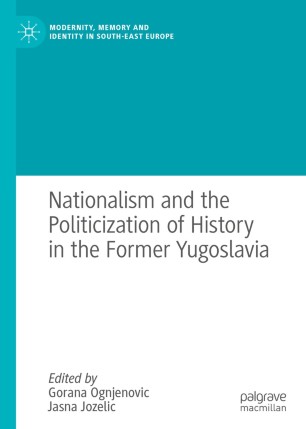
Subotić J., Ejdus F. (2021) Constructing a Truth Regime: The 1999 NATO Intervention in Serbian Political Memory. In: Ognjenovic G., Jozelic J. (eds) Nationalism and the Politicization of History in the Former Yugoslavia. Modernity, Memory and Identity in South-East Europe. Palgrave Macmillan, Cham. https://doi.org/10.1007/978-3-030-65832-8_9

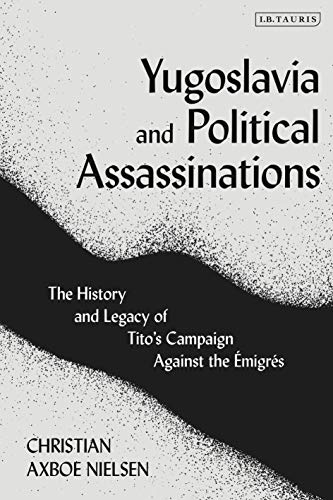
Yugoslavia and Political Assassinations: The History and Legacy of Tito’s Campaigns Against the Émigrés

0

Nielsen, Christian Axboe. 2021. Yugoslavia and Political Assassinations: The History and Legacy of Tito’s Campaigns Against the Émigrés. IB Tauris, 253 pp


Available here https://scindeks-clanci.ceon.rs/data/pdf/2217-995X/2021/2217-995X2101081E.pdf

Towards the existentialist turn in IR: introduction to the symposium on anxiety (co-authored with Jelena Subotić)

0

This symposium is a follow-up to the 2019 CEEISA/ISA conference ‘International Relations in the Age of Anxiety’ held at the Faculty of Political Science, University of Belgrade, Serbia, in June 2019. The central piece in the symposium is the keynote address by Bahar Rumelili on the untapped potential of existentialism in IR followed by highly engaged responses by Felix Berenskötter, Karl Gustafsson, Brent Steele and Andreja Zevnik. In this introduction we first describe the context in which we organised the conference and our motivations to choose the topic of the age of anxiety. We also reflect on how the global pandemic, which erupted in January 2020, made our topic more relevant than ever before. We then briefly introduce each piece and discuss what we see as the key questions they raise.

Link: https://link.springer.com/article/10.1057/s41268-021-00233-z