The entry was published in Ejdus, Filip. “Serbia’s Civil-Military Relations.” Oxford Research Encyclopedia of Politics. 2020. Online Publication Juy 2020, DOI: 10.1093/acrefore/9780190228637.013.1901.
The entry is available here.

The entry was published in Ejdus, Filip. “Serbia’s Civil-Military Relations.” Oxford Research Encyclopedia of Politics. 2020. Online Publication Juy 2020, DOI: 10.1093/acrefore/9780190228637.013.1901.
The entry is available here.
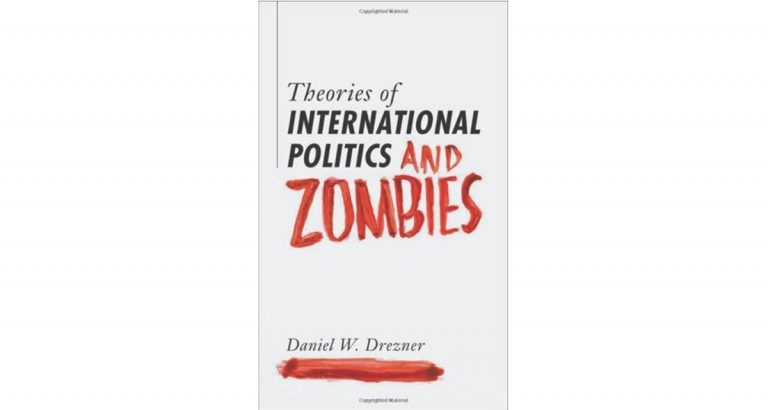
Daniel W. Drezner, Theories of International Politics and Zombies, Princeton University Press, Princeton, 2011, p. 153.
DOWNLOAD RELATED DOCUMENTS
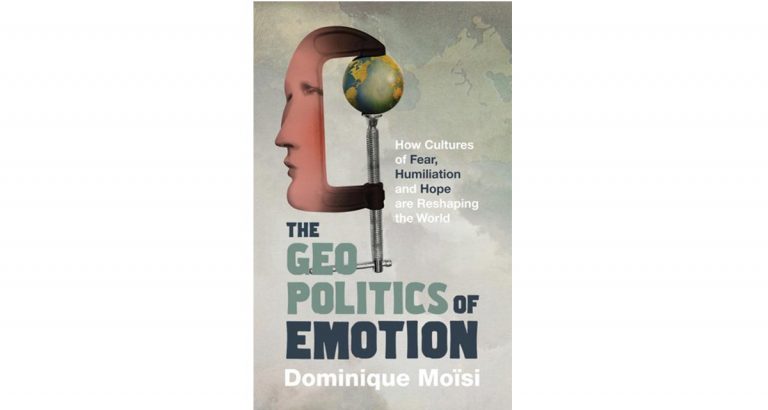
Dominique Moïsi, The Geopolitics of Emotion: How Cultures of Fear, Humiliation and Hope Are Reshaping the World, New York, Doubleday, 2009, p. 176
DOWNLOAD RELATED DOCUMENTS

This book develops a novel way of thinking about crises in world politics. By building on ontological security theory, this work conceptualises critical situations as radical disjunctions that challenge the ability of collective agents to ‘go on’.
These ontological crises bring into the realm of discursive consciousness four fundamental questions related to existence, finitude, relations, and autobiography. In times of crisis, collective agents such as states are particularly attached to their ontic spaces or spatial extensions of the self that cause collective identities to appear more firm and continuous.
These theoretical arguments are illustrated in a case study looking at Serbia’s anxiety over the secession of Kosovo. The author argues that Serbia’s seemingly irrational and self-harming policy vis-à-vis Kosovo can be understood as a form of ontological self-help. It is a rational pursuit of biographical continuity and a healthy sense of self in the face of an ontological crisis triggered by the secession of a province that has been constructed as the ontic space of the Serbian nation since the late 19th century..
More info here.

The project aims to develop new and innovative lifelong learning programmes and courses in public management (non-existing in Serbia in this field) and policy analysis for civil servants and employees in the area of policy resarch and design.

The project aims to examine the dynamic relationship between elites and masses in policy-making about common defence in the multi-level European system. Two overarching questions are at the heart of the project: What and how do elites and European mass publics think about greater (European) defence, security, and military integration?
More specifically, the project seeks to achieve the following seven objectives: (1) studying what mass publics and security elites understand by “common defence”; (2) estimating the level of public support for or opposition to a vast array of possible forms of defence integration across Europe, including support for some form of European military; (3) exploring differences in citizen perceptions and preferences across regions within the EU; (4) identifying individual-level values, predispositions, attitudes, and demographic factors that shape support for or opposition to defence integration; (5) examining how elite cues, social cues, and real-world events affect defence integration attitudes; (6) analysing the interplay of media content, individual media exposure, and mass opinion toward European defence and security integration; and (7) evaluating how (and how accurately) elites perceive mass opinion toward European defence and security integration, and vice versa.
The project combines qualitative (elite interviews) and quantitative research (surveys with embedded experiments and media content analysis) to examine what factors affect European security policy preferences. The primary focus of the analysis is on France, Germany, Italy, and Great Britain, four countries that will play an important role in European defence integration.
The project is co-directed by the two Mannheim scholars and the following project partners: Filip Ejdus (Belgrade), Martial Foucault (Paris), Catherine Hoeffler (Bordeaux), Stephanie Hofmann (Geneva), Pierangelo Isernia (Siena), Jean Joana (Montpellier), Theresa Kuhn (Amsterdam), Bogdan Radu (Babes-Bolyai), Jason Reifler (Exeter), Thomas Scotto (Glasgow), Seiki Tanaka (Leeds), and Catarina Thomson (Exeter).
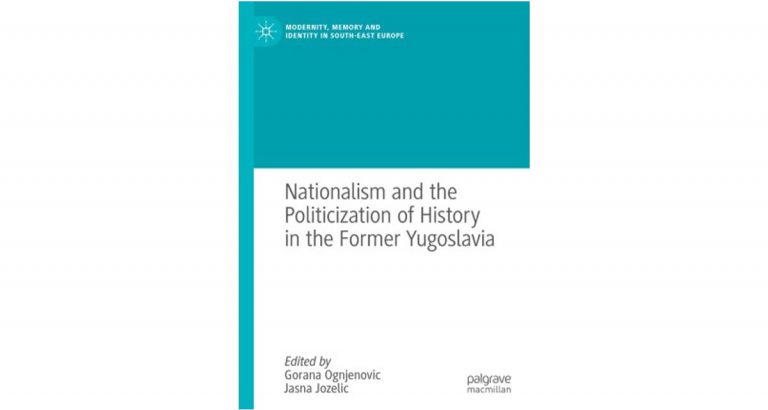
The aim of this chapter is to understand how and why the local truth regime concerning the NATO intervention outlived the political regime that created it.
Here we probe not only the system of power that created the truth regime around the NATO intervention in Serbia, but also the system that maintained, developed, and diffused it after Milošević’s fall in October 2000.
We further look beyond the narrative’s coercive, institutional, and structural power dimension to capture its productive aspects, especially its power to create and reproduce collective identities.
In particular, we trace how alternative scripts about the NATO intervention were silenced, disciplined, or marginalized over the past two decades, and to what political effect.

One of the central debates in Ontological Security Studies (OSS) has been about the level-of-analysis. While some authors focus on individuals, others have scaled up the concept and applied it to collectives such as states as the main ontological security seekers.
In this article, we contribute to the level-of-analysis debate in OSS by providing a novel argument in defense of scaling up. By drawing on the literatures on complexity and securitization, we conceptualize ontological security as an emergent phenomenon. It arises from the ground-up and is driven by feedback loops in a non-linear and spontaneous fashion from horizontal micro-interactions and securitizations from below, ultimately reaching a tipping point.
We illustrate this argument in a case study of anti-immigrant mobilization in Serbia since the outbreak of the European migration crisis (2015–2020). At the outset of the crisis, state officials interpreted the migration crisis as a manageable and temporary situation, adopted an “open door” policy and even banned far-right extremist demonstrations against migration.
Over time, however, ontological insecurity over the migrant threat has gradually emerged from the bottom-up through a cascade of rumors, connective action, and everyday securitizing acts.
While it might be too early to conclude that the national tipping point has been reached, this case study clearly shows why ontological insecurity merits to be studied as an emergent phenomenon.
Link: https://econtent.hogrefe.com/doi/abs/10.1027/1016-9040/a000419?journalCode=epp

DOWNLOAD RELATED DOCUMENTS